AI Overview Optimization: Guide to AI Overviews in Google Search
Tags: ai-overviews, content-planning
Learn what Google AI Overviews are, how they work, why they matter for SEO, and how PowRank helps track sources, visibility, and content gaps over time.
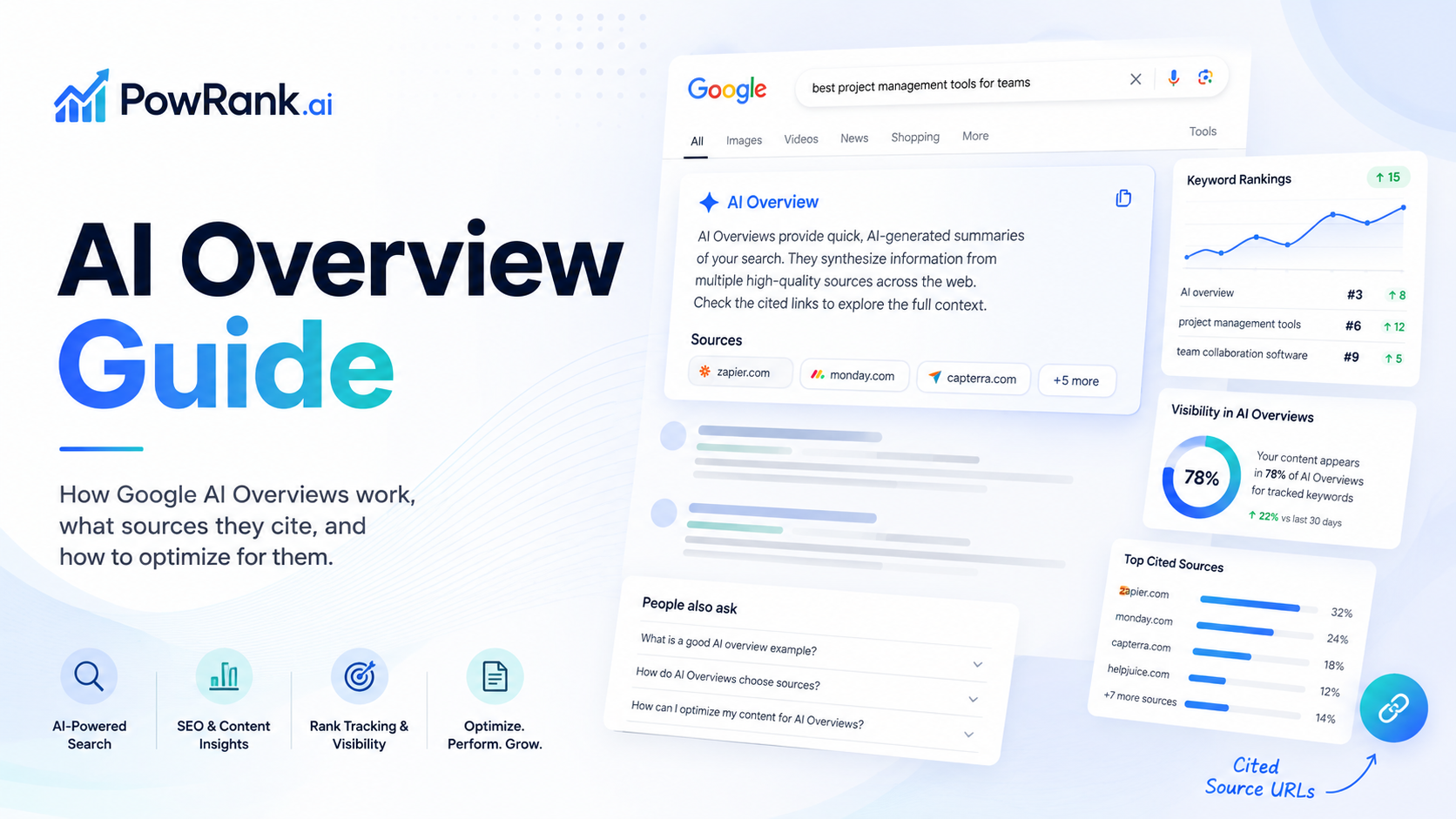
Google Search doesn't look like it used to. A results page is now a mix of organic listings, ads, People Also Ask boxes, and AI-generated summaries. For many queries, the first thing a searcher sees is an AI Overview: a generative AI Overview answer that sits at the top of Google Search and often cites the web sources behind it.
That shift changes the SEO question. It's no longer enough to know whether you rank. You also need to know whether you appear inside the AI Overview, because it sits above everything else on the page. The AI Overview impact on SEO is simple to state. Visibility now means being cited in the answer, not just ranking below it.
This guide covers the full picture of AI Overview Google Search results: what they are, how they work, where they pull their sources, why they change SEO measurement, and how to get in an AI Overview.
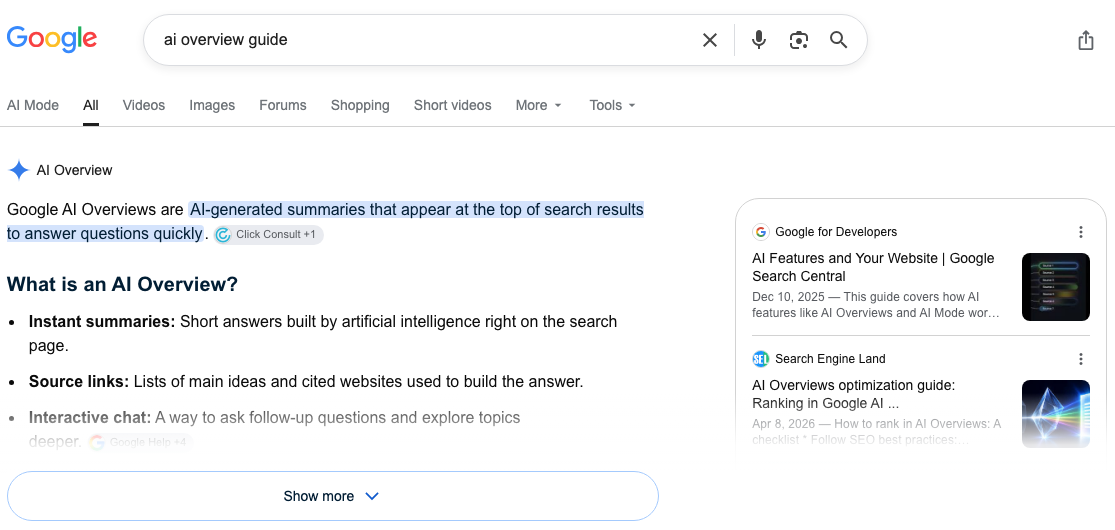
## What Is an AI Overview? An AI Overview in Google Search is a generative AI summary that appears for certain queries. Google writes a short answer to the search, places it at the top of the results, and usually links to the sources it drew from.
That's the full AI Overview definition. The AI Overview meaning only gets muddy when it's conflated with AI Mode, Google's separate chat-style search experience. An overview appears inside a normal results page. As of the time of publishing this guide, AI Mode is its own tab.
The practical effect is a searcher can read the answer and get what they came for before clicking any website. For some queries, the overview (not your page) is the first impression of your brand. Your website is just one of the AI Overview sources.
## How Do AI Overviews Work? How AI Overviews work is less predictable than classic ranking. Google shows an AI Overview when its systems decide generative AI will be especially useful for the query. In its own documentation, Google describes this as happening when a searcher wants to understand information from a range of sources. Google has shared part of the mechanics. For complex questions, its systems can split the query into related sub-questions, run those searches in parallel, and build the answer from across the results. Google calls this query fan-out. It matters for SEO because your page can get pulled into an overview for answering one sub-question well, even on a query where you don't rank.
In practice, overviews are more common on informational, research, comparison, and question-based searches. Those are the queries where a synthesized answer helps more than ten links. However, that does not mean there's a formula. No setting or tag forces an overview to appear, or guarantees your page becomes one of its AI Overview sources.
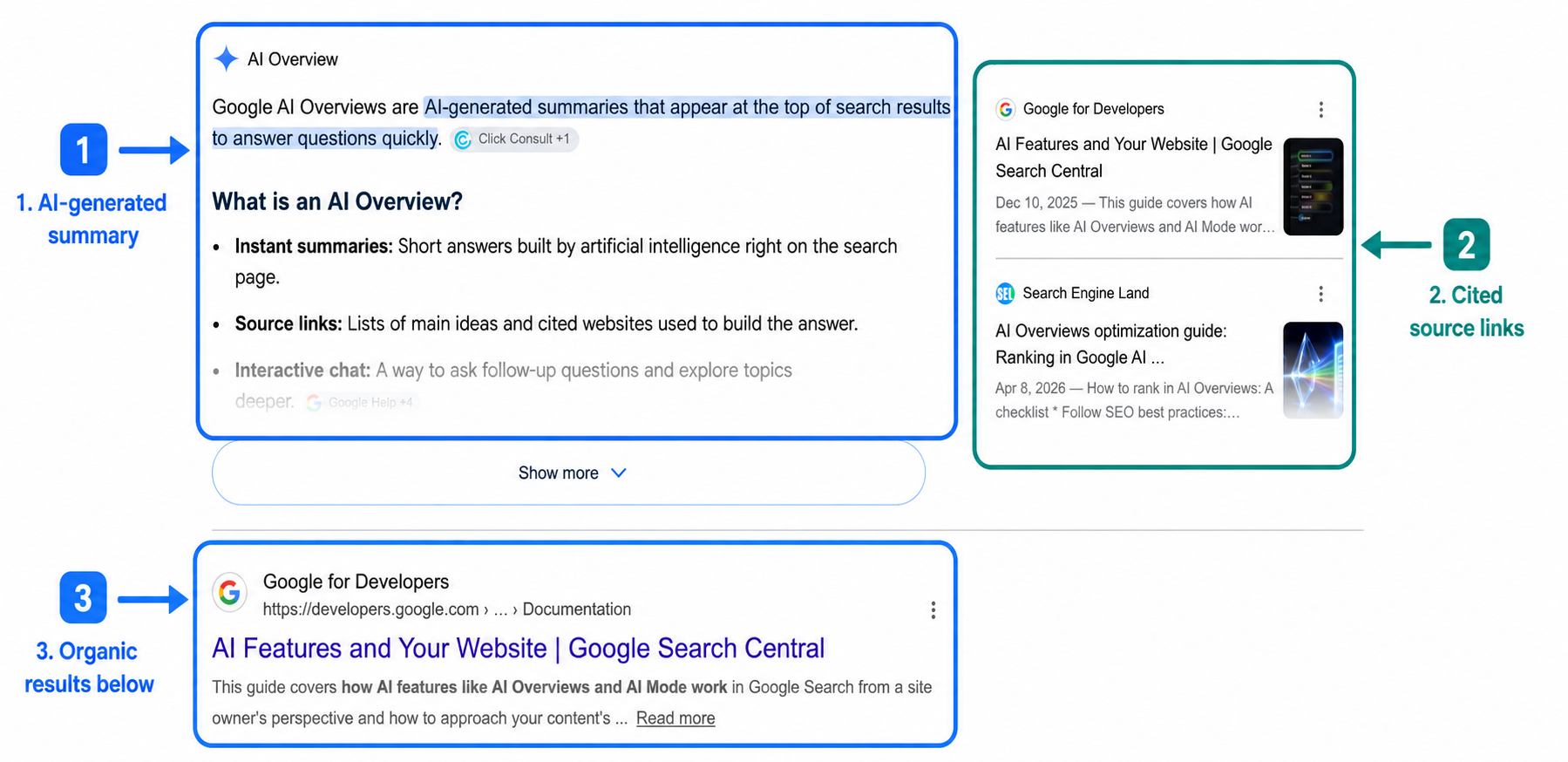 AI Overview visibility and traditional organic rankings should be reviewed together.
## Why AI Overviews Change SEO Measurement In AI Overview optimization, SERP rankings still matter. They just no longer tell the whole story. A page can rank near the top organically and never appear in the AI Overview. Another page can be cited in the overview without ranking near the top at all.
That gap is why AI Overview optimization needs its own measurement layer. To see where you actually stand, you have to track which keywords generate an AI Overview, which sources get cited, and whether your site is one of them.
The divergence isn't marginal. Ahrefs' 2026 analysis found only 38% of pages cited in AI Overviews also ranked in the top 10 for the same query, down from 76% six months earlier. Exact figures vary by study and methodology, but the direction is consistent: citations and rankings are drifting apart. You have to measure both.
This is the gap PowRank was built to close. 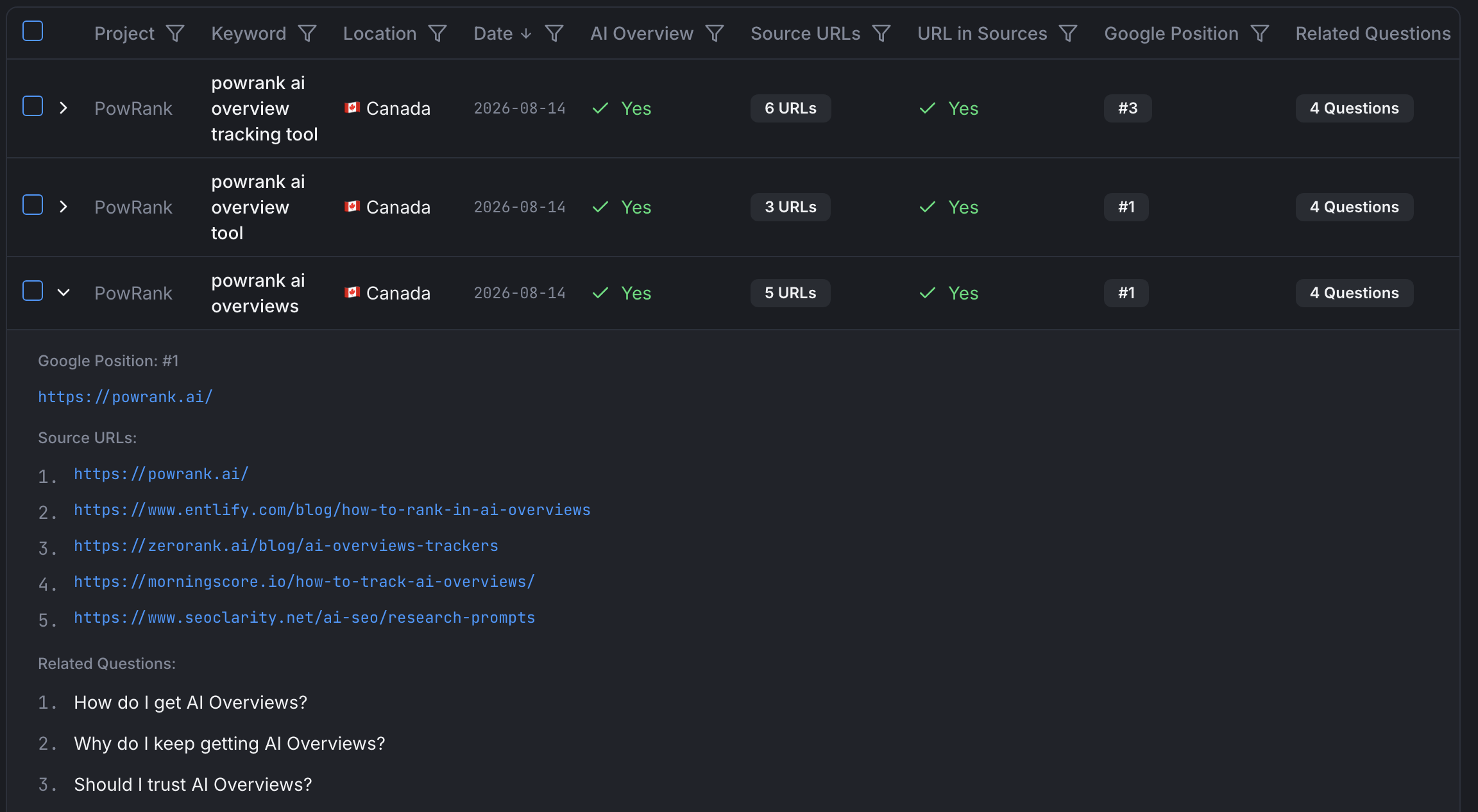 PowRank helps compare AI Overview inclusion with traditional organic visibility.
## What Are AI Overview Sources? AI Overview sources are the pages Google references inside the generated answer. They matter because they show, query by query, which pages Google is leaning on to build the response users see. Study those sources and patterns emerge. A competitor keeps getting cited. High-authority sites own one query while directories crowd another. Sometimes the cited pages simply answer the question more directly than yours. Those patterns are the clue to how to appear in AI Overview results for that query, because they show what Google currently treats as a good answer.
Reviewing AI Overview source URLs helps identify which pages Google is citing for a target keyword.
## How to Appear in AI Overviews There's no guaranteed way to force your way into an AI Overview. What you can do is make your content the kind Google tends to pull from. Most of how to get in AI Overview results comes down to being the clearest, most complete answer available. A few habits help: - Answer the main query clearly, near the top of the page. - Write in concise, direct, answer-first sections. - Add FAQs built from the real questions people ask about the topic. - Cover the topic more completely than the competing pages. - Include comparisons, examples, definitions, and supporting detail. - Strengthen trust signals: author information, business details, reviews, citations, and clear policies. - Make sure the page is crawlable, indexable, and eligible to appear in Google Search. None of this is exotic. Google's own guidance is that standard SEO fundamentals still apply to its AI features, including crawlability, indexability, useful content, and snippet eligibility. AI Overview optimization is those fundamentals aimed at a new surface. Here's a guide from Google for how to perform better in AI search experiences.
## How PowRank Helps Track AI Overview Opportunities This is where PowRank fits. You enter your SEO-focused keywords and it gathers live search data for each one: - Which keywords trigger an AI Overview - Which websites are cited as AI Overview sources - Whether your target site is included - Organic Google ranking data - The SERP value when you appear on page one - People Also Ask questions - Historical values and refreshed results over time Together, those data points show the AI Overview impact on SEO for your keyword set, not an industry average. And collecting the data is only the start. The point is what comes next: export the results, analyze the patterns, and build a prioritized plan for which pages to update first.
### Turning AI Overview Data Into a Content Plan Data is only useful if it changes what you do. Here's a workflow that turns a PowRank export into a content plan: 1. Export keyword data from PowRank. 2. Review which keywords already trigger AI Overviews. 3. Identify where your site is missing. 4. Review which competitors or authority sites are being cited. 5. Analyze People Also Ask questions for FAQ and content expansion ideas. 6. Prioritize pages where your site already has topical relevance or organic visibility. 7. Update content with clearer answers, stronger supporting sections, and better trust signals. 8. Refresh results later to compare performance. Many teams speed up the analysis by uploading the exported CSV into an AI tool and asking it to surface patterns: over-represented topics, content gaps, and the highest-priority opportunities. That works well, with one caveat. Let the AI surface the patterns faster than you could by hand, but keep the judgment calls: every update still has to pass brand fit, user intent, SEO value, and plain accuracy. That filtering is where AI Overview optimization becomes strategy instead of imitation.
### Track, Refresh, and Compare Results Over Time AI Overview results don't sit still. A keyword can gain or lose its overview. Source URLs change. Your site might get included after you improve a page, or a competitor might replace an older source. So treat AI Overview optimization as ongoing, not one-and-done. PowRank lets you refresh results at whatever interval suits you and compare them against your earlier targets. Historical exports let you see the trend, not just today's snapshot.
## Learn How to Use PowRank Want the step-by-step? The How to Use PowRank page walks through creating a project, adding keywords, viewing keyword data, exporting CSV files, refreshing results, and managing projects.
## AI Overview Optimization Starts With Better Visibility AI Overview optimization isn't about tricks or guarantees. Knowing how to appear in AI Overview results starts with visibility: which keywords trigger an overview, which sources Google cites, and where your site is missing from the answer.
That's the gap PowRank closes. It turns AI Overview data into a practical SEO workflow, so you can prioritize the right updates, track progress, and understand how visible you really are in AI-driven search. See what your keywords are doing in AI Overviews.